
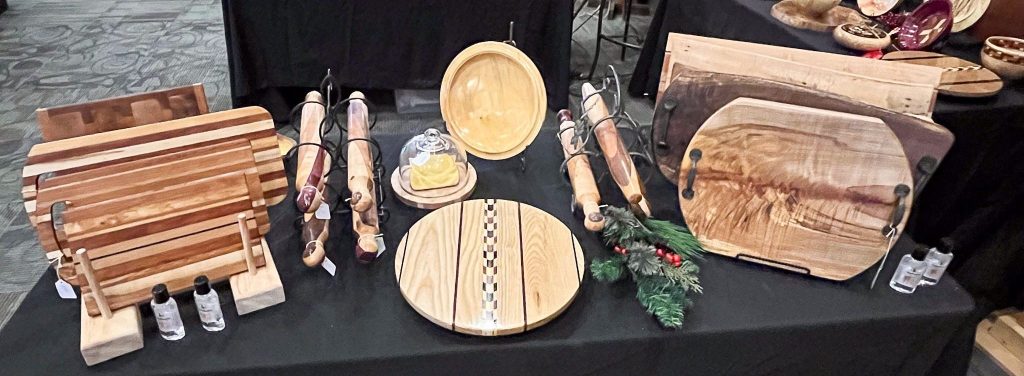
To my customers; you have purchased a high-quality, hand crafted wooden item made from select native American and/or exotic hardwoods chosen for their tight grain and beauty. When the construction involves multiple pieces of wood, they are bonded with water resistant or water proof glue.
Items that may come into contact with food are finished with food safe finishes such as shellac, Tung Oil, bees wax and mineral oil or food contact approved polyurethane.
Items that are purely ornamental (vases, bowls with stone or epoxy inlay etc.) are finished with satin polyurethane, high gloss polyurethane or high gloss lacquer.
Many woods are photosensitive. To preserve their color, don’t place them in windows or in locations where they are subject to direct sunlight.
With proper care, wooden items will last several generations. I sincerely thank you for your patronage and hope you will get as much enjoyment from it as I did in creating it.
Charcuterie Board Care
Everyday Cleaning Steps
- Scrape off residue: Use a spatula or the back of a knife, or a soft sponge to clear away leftover cheese, meat, or crumbs.
- Wash with soap and water: Apply a small amount of mild dish soap and warm water, scrubbing both sides evenly with a non-scratch sponge. Do not submerge the board or put it in the dishwasher.
- Rinse quickly: Rinse off all soap residue with warm water.
- Dry immediately: Wipe the board completely dry with a clean towel. Prop it upright against a wall or place it on its side so air can circulate evenly on both sides as it finishes drying.
Cutting Board Care
Caring for a wooden cutting board comes down to two things: cleaning and conditioning,
Never put your cutting board in the dishwasher and never let it sit in water.
Using a scrub brush, scrub away any stuck-on food or stains with hot, soapy water and rinse, then, using a spray bottle, spritz the board with hydrogen peroxide. The peroxide will start to bubble and foam – this is a sign that it’s working and getting rid of any bacteria. After this, rinse the peroxide and wipe with a dry cloth.
You can condition your board by applying a light coat of butcher block oil or mineral oil (available from grocery stores or pharmacies) and massage it into the wood, giving it a nice depth of color then wiping away the excess oil with a clean cloth.
It’s not recommended to use olive oil or vegetable oil to oil your cutting board because these oils can go rancid over time, leaving an unpleasant smell and potentially affecting the taste of food prepared on the board
As long as your cutting board is never left standing in water and oiled regularly, it will last a lifetime.
Rolling pin care
The rolling pin can be wiped clean with a damp cloth.
As with any natural wood product, it cannot be put in a dishwasher or left soaking in water
To keep your rolling pin looking its best, apply a light coat of butcher block oil or pharmaceutical grade mineral oil whenever it begins to look dull. Do not use olive oil or vegetable oils as they will turn rancid over time.
Caring for wooden bowls, platters and vases
As with any wooden item, never place these in a dishwasher or leave them sitting in water.
Functional items can be wiped out with a damp cloth and dried. Fruit should not be left in wooden fruit bowls for extended periods of time as their moisture and acids can mar the bowl’s finish.
Ornamental items can be dusted with a soft cloth. Do not use detergents as they can dull the finish. They will benefit from a light coat of Johnsons paste wax buffed with a soft cloth yearly.
Wooden vases are not intended to hold cut flowers in water.
Do not place your wooden items near heat registers or any location where they are subjected to heat extremes as this will cause the wood to dry out and possibly crack.